
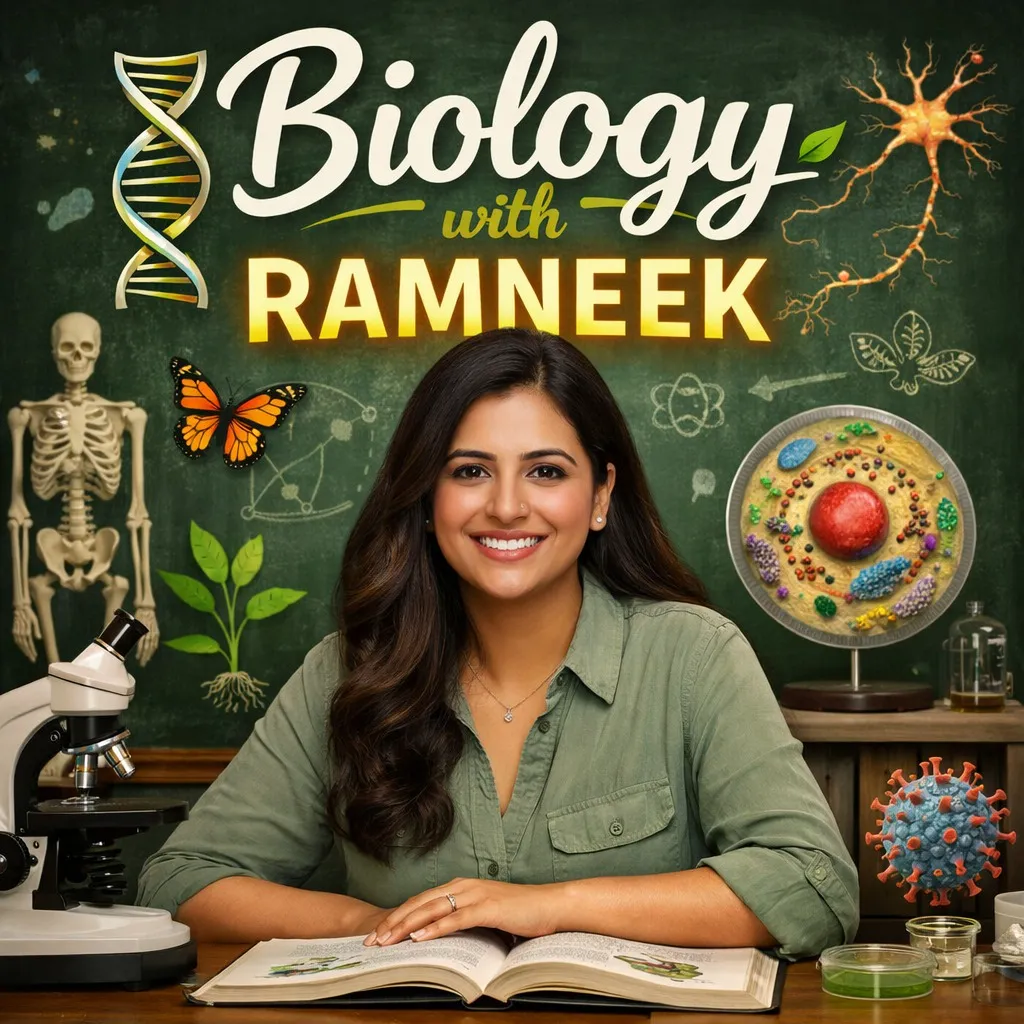

Ramneek kaur
Online
Skills
About
Ramneek Kaur is a dedicated tutor who focuses on making learning engaging and accessible. She teaches in English, Hindi, and Punjabi, ensuring that her students feel comfortable an...
Ramneek Kaur is a dedicated tutor who focuses on making learning engaging and accessible. She teaches in English, Hindi, and Punjabi, ensuring that her students feel comfortable and understood. Ramneek is passionate about clarifying complex topics and provides personalized support to help each student succeed. Her approachable style encourages open communication, allowing students to ask questions and express their thoughts freely. With her guidance, students can build confidence and achieve their academic goals.
Ramneek kaur
Online
Skills :
Ramneek Kaur is a dedicated tutor who focuses on making learning engaging and accessible. She teaches in English, Hindi, and Punjabi, ensuring that her students feel comfortable an...
Ramneek Kaur is a dedicated tutor who focuses on making learning engaging and accessible. She teaches in English, Hindi, and Punjabi, ensuring that her students feel comfortable and understood. Ramneek is passionate about clarifying complex topics and provides personalized support to help each student succeed. Her approachable style encourages open communication, allowing students to ask questions and express their thoughts freely. With her guidance, students can build confidence and achieve their academic goals.
FindMyGuru is a tutor discovery platform that helps students find and connect with experienced tutors and institutes across a wide range of subjects and skills. Students can explore tutor profiles, compare expertise, and contact tutors directly for online or in-person learning.FindMyGuru facilitates discovery and connections between students and tutors or institutes. All classes and learning arrangements are handled directly between students and the respective tutors or institutes
Courses by: Ramneek kaur
Class 11 CBSE Biology classes
What Student Will Learn
Unit-I Diversity of Living Organisms
Chapter-1: The Living World
Biodiversity; Need for classification; three domains of life; taxonomy and systematics;
concept of species and taxonomical hierarchy; binomial nomenclature
Chapter-2: Biological Classification
Five kingdom classification; Salient features and classification of Monera, Protista and
Fungi into major groups; Lichens, Viruses and Viroids.
Chapter-3: Plant Kingdom
Classification of plants into major groups; Salient and distinguishing features and a few
examples of Algae, Bryophyta, Pteridophyta, Gymnospermae and Angiosperms.
Chapter-4: Animal Kingdom
Salient features and classification of animals, non-chordates up to phyla level and
chordates upto class level (salient features and at a few examples of each category).
(No live animals or specimen should be displayed.)
Unit-II Structural Organization in Plants and Animals
Chapter-5: Morphology of Flowering Plants
Morphology of different parts of flowering plants: root, stem, leaf, inflorescence, flower,
fruit and seed. Description of family Solanaceae
Chapter-6: Anatomy of Flowering Plants
Anatomy and functions of tissue systems in dicots and monocots.
Chapter-7: Structural Organisation in Animals
Morphology, Anatomy and functions of different systems (digestive, circulatory, respiratory,
nervous and reproductive) of frog.
Unit-III Cell: Structure and Function
Chapter-8: Cell-The Unit of Life
Cell theory and cell as the basic unit of life, structure of prokaryotic and eukaryotic cells;
Plant cell and animal cell; cell envelope; cell membrane, cell wall; cell organelles - structure
and function; endomembrane system, endoplasmic reticulum, golgi bodies, lysosomes,
vacuoles, mitochondria, ribosomes, plastids, microbodies; cytoskeleton, cilia, flagella,
centrioles (ultrastructure and function); nucleus.
Chapter-9: Biomolecules
Chemical constituents of living cells: biomolecules, structure and function of proteins,
carbohydrates, lipids, and nucleic acids; Enzyme - types, properties, enzyme action.
(Topics excluded: Nature of Bond Linking Monomers in a Polymer, Dynamic State of Body
Constituents Concept of Metabolism, Metabolic Basis of Living, The Living State)
Chapter-10: Cell Cycle and Cell Division
Cell cycle, mitosis, meiosis and their significance
Unit-IV Plant Physiology
Chapter-11: Photosynthesis in Higher Plants
Photosynthesis as a means of autotrophic nutrition; site of photosynthesis, pigments
involved in photosynthesis (elementary idea); photochemical and biosynthetic phases of
photosynthesis; cyclic and non-cyclic photophosphorylation; chemiosmotic hypothesis;
photorespiration; C3 and C4 pathways; factors affecting photosynthesis.
Chapter-12: Respiration in Plants
Exchange of gases; cellular respiration - glycolysis, fermentation (anaerobic), TCA cycle
and electron transport system (aerobic); energy relations - number of ATP molecules
generated; amphibolic pathways; respiratory quotient.
Chapter-13: Plant - Growth and Development
Seed germination; phases of plant growth and plant growth rate; conditions of growth;
differentiation, dedifferentiation and redifferentiation; sequence of developmental
processes in a plant cell; plant growth regulators - auxin, gibberellin, cytokinin, ethylene,
ABA.
Unit-V Human Physiology
Chapter-14: Breathing and Exchange of Gases
Respiratory organs in animals (recall only); Respiratory system in humans; mechanism of
breathing and its regulation in humans - exchange of gases, transport of gases and
regulation of respiration, respiratory volume; disorders related to respiration - asthma,
emphysema, occupational respiratory disorders.
Chapter-15: Body Fluids and Circulation
Composition of blood, blood groups, coagulation of blood; composition of lymph and its
function; human circulatory system - Structure of human heart and blood vessels; cardiac
cycle, cardiac output, ECG; double circulation; regulation of cardiac activity; disorders of
circulatory system - hypertension, coronary artery disease, angina pectoris, heart failure.
Chapter-16: Excretory Products and their Elimination
Modes of excretion - ammonotelism, ureotelism, uricotelism; human excretory system –
structure and function; urine formation, osmoregulation; regulation of kidney function -
renin - angiotensin, atrial natriuretic factor, ADH and diabetes insipidus; role of other
organs in excretion; disorders - uremia, renal failure, renal calculi, nephritis; dialysis and
artificial kidney, kidney transplant.
Chapter-17: Locomotion and Movement
Types of movement - ciliary, flagellar, muscular; skeletal muscle, contractile proteins and
muscle contraction; skeletal system and its functions; joints; disorders of muscular and
skeletal systems - myasthenia gravis, tetany, muscular dystrophy, arthritis, osteoporosis,
gout.
Chapter-18: Neural Control and Coordination
Neuron and nerves; Nervous system in humans - central nervous system; peripheral
nervous system and visceral nervous system; generation and conduction of nerve impulse
Chapter- 19: Chemical Coordination and Integration
Endocrine glands and hormones; human endocrine system - hypothalamus, pituitary,
pineal, thyroid, parathyroid, adrenal, pancreas, gonads; mechanism of hormone action
(elementary idea); role of hormones as messengers and regulators, hypo - and
hyperactivity and related disorders; dwarfism, acromegaly, cretinism, goiter, exophthalmic
goitre, diabetes, Addison's disease.
Class 12 CBSE Biology classes
What Student Will Learn
Unit-VI Reproduction
Chapter-1: Sexual Reproduction in Flowering Plants
Flower structure; development of male and female gametophytes; pollination - types,
agencies and examples; out breeding devices; pollen-pistil interaction; double fertilization;
post fertilization events - development of endosperm and embryo, development of seed and
formation of fruit; special modes- apomixis, parthenocarpy, polyembryony; Significance of
seed dispersal and fruit formation.
Chapter-2: Human Reproduction
Male and female reproductive systems; microscopic anatomy of testis and ovary;
gametogenesis -spermatogenesis and oogenesis; menstrual cycle; fertilisation, embryo
development upto blastocyst formation, implantation; pregnancy and placenta formation
(elementary idea); parturition (elementary idea); lactation (elementary idea).
Chapter-3: Reproductive Health
Need for reproductive health and prevention of Sexually Transmitted Diseases (STDs); birth
control - need and methods, contraception and medical termination of pregnancy (MTP);
amniocentesis; infertility and assisted reproductive technologies - IVF, ZIFT, GIFT
(elementary idea for general awareness).
Unit-VII Genetics and Evolution
Chapter-4: Principles of Inheritance and Variation
Heredity and variation: Mendelian inheritance; deviations from Mendelism – incomplete
dominance, co-dominance, multiple alleles and inheritance of blood groups, pleiotropy;
elementary idea of polygenic inheritance; chromosome theory of inheritance; chromosomes
and genes; Sex determination - in humans, birds and honey bee; linkage and crossing over;
sex linked inheritance - haemophilia, colour blindness; Mendelian disorders in humans -
thalassemia; chromosomal disorders in humans; Down's syndrome, Turner's and
Klinefelter's syndromes.
Chapter-5: Molecular Basis of Inheritance
Search for genetic material and DNA as genetic material; Structure of DNA and RNA; DNA
packaging; DNA replication; Central Dogma; transcription, genetic code, translation; gene
expression and regulation - lac operon; Genome, Human and rice genome projects; DNA
fingerprinting.
Chapter-6: Evolution
Origin of life; biological evolution and evidences for biological evolution (paleontology,
comparative anatomy, embryology and molecular evidences); Darwin's contribution, modern
synthetic theory of evolution; mechanism of evolution - variation (mutation and
recombination) and natural selection with examples, types of natural selection; Gene flow
and genetic drift; Hardy- Weinberg's principle; adaptive radiation; human evolution.
Unit-VIII: Biology and Human Welfare
Chapter-7: Human Health and Diseases
Pathogens; parasites causing human diseases (malaria, dengue, chikungunya, filariasis,
ascariasis, typhoid, pneumonia, common cold, amoebiasis, ring worm) and their control;
Basic concepts of immunology - vaccines; cancer, HIV and AIDS; Adolescence - drug
and alcohol abuse.
Chapter-8: Microbes in Human Welfare
Microbes in food processing, industrial production, sewage treatment, energy generation
and microbes as bio-control agents and bio-fertilizers. Antibiotics; production and judicious
use.
Unit-IX Biotechnology and its Applications
Chapter-9: Biotechnology - Principles and Processes
Genetic Engineering (Recombinant DNA Technology).
Chapter-10: Biotechnology and its Applications
Application of biotechnology in health and agriculture: Human insulin and vaccine
production, stem cell technology, gene therapy; genetically modified organisms - Bt crops;
transgenic animals; biosafety issues, biopiracy and patents.
Unit-X Ecology and Environment
Chapter-11: Organisms and Populations
Population interactions - mutualism, competition, predation, parasitism; population attributes
- growth, birth rate and death rate, age distribution.
Chapter-12: Ecosystem
Ecosystems: Patterns, components; productivity and decomposition; energy flow; pyramids
of number, biomass, energy.
Chapter-13: Biodiversity and its Conservation
Biodiversity-Concept, patterns, importance; loss of biodiversity; biodiversity conservation;
hotspots, endangered organisms, extinction, Red Data Book, Sacred Groves, biosphere
reserves, national parks, wildlife, sanctuaries and Ramsar sites.
Class 9th CBSE Biology classes
What Student Will Learn
Chapter 1: Cell
Key Topics:
Discovery of the cell and its status as the basic structural and functional unit of life.
Comparison of Plant vs. Animal cells and Prokaryotic vs. Eukaryotic cells.
Structure and function of key organelles: Nucleus, Mitochondria, Chloroplast, Endoplasmic Reticulum, Vacuoles, Plasma Membrane, and Cell Wall.
Permeability of cell membranes, cellular division, and cancer.
Recent advancements in cell biology.
Chapter 2: Tissues
Key Topics:
Introduction, importance, and levels of organization in living organisms.
Plant Tissues: Meristematic (types/functions) and Permanent (types/structure/functions).
Animal Tissues: Overview of Epithelial, Connective, Muscular, and Nervous tissues.
Elementary idea of the musculoskeletal system.
Care of the musculoskeletal system: nutrition, exercise, postural care, and injuries.
Chapter 3: Reproduction
Key Topics:
Introduction to Sexual and Asexual forms of reproduction with examples.
Reproduction in flowering plants: Flower parts, pollination, fertilization, and seed dispersal.
Human Reproduction: Male and female systems, gamete formation, pregnancy, development of embryo, and the menstrual cycle.
Reproductive health, hygiene, and birth control methods.
Chapter 4: Diversity
Key Topics:
Importance of classification and Binomial Nomenclature.
The Five Kingdoms: Key features and examples.
Major divisions of the Plant and Animal kingdoms.
Acellular entities: Overview of viruses.
Class 10 CBSE Biology classes
What You Will Learn
This course covers key topics in Class 10 CBSE Biology. You will explore important concepts step by step. Each topic builds on the previous one, making it easy to understand.
Life Processes: You will learn about nutrition, respiration, transportation, and excretion in both plants and animals. This includes how these processes work and why they are essential for life.
Control and Coordination: This section focuses on tropic movements in plants. You will also study the human nervous system, reflex actions, and the role of hormones in coordination.
How do Organisms Reproduce?: You will explore reproduction in both animals and plants. This includes understanding sexual and asexual reproduction, as well as topics related to reproductive health.
Heredity and Evolution: You will learn about basic concepts of heredity, including traits and Mendel's contributions. An introduction to evolution will help you understand how species change over time.
Our Environment: This topic covers ecosystems and various environmental problems. You will learn about ozone depletion, waste production, and management strategies for a sustainable environment.
Throughout the course, you will practice key skills in each area. This will involve hands-on activities, discussions, and assessments. By the end of the course, you will have a solid foundation in biology concepts essential for your studies.
Class 6 Science NCERT based
What You Will Learn
This course covers the Class 6 Science syllabus based on NCERT guidelines. You will explore various core topics in science through a structured approach. Here are the main areas of study:
- Unit 1: The Wonderful World of Science - Understand what science is and its importance in our daily lives.
- Unit 2: Diversity in the Living World - Learn about different types of living organisms and their classifications.
- Unit 3: Mindful Eating: A Path to a Healthy Body - Discover the principles of healthy eating and nutrition.
- Unit 4: Exploring Magnets - Examine the properties of magnets and their applications.
- Unit 5: Measurement of Length and Motion - Learn how to measure lengths and understand the concept of motion.
- Unit 6: Materials around Us - Identify various materials and their properties.
- Unit 7: Temperature and its Measurement - Understand temperature, its measurement, and its significance.
- Unit 8: A Journey through States of Water - Explore the different states of water and their transformations.
- Unit 9: Methods of Separation in Everyday Life - Learn various methods to separate mixtures in daily activities.
- Unit 10: Living Creatures: Exploring their Characteristics - Investigate the characteristics of different living creatures.
- Unit 11: Nature's Treasures - Discover the natural resources and their importance.
- Unit 12: Beyond Earth - Explore the universe and learn about celestial bodies.
You will practice skills such as observation, measurement, and categorization. Each topic is explained step by step to ensure understanding. The course progresses from basic concepts to more complex ideas, allowing you to build on your knowledge as you advance through the units.
Class 7 Science NCERT based
What You Will Learn
This course covers essential concepts in Grade 7 Science based on the NCERT curriculum. You will explore a range of topics that build your understanding of science step by step.
Chapter 1: The Ever Evolving World of Science - Discover the nature of science and how it changes over time.
Chapter 2: Exploring Substances Acidic Basic and Neutral - Learn about different types of substances and their properties.
Chapter 3: Electricity Circuits and Their Components - Understand the basics of electricity and how circuits work.
Chapter 4: The World of Metals and Non-metals - Explore the characteristics and uses of metals and non-metals.
Chapter 5: Changes Around Us Physical and Chemical - Analyze the different types of changes in matter.
Chapter 6: Adolescence A Stage of Growth - Learn about the physical and emotional changes during adolescence.
Chapter 7: Heat Transfer in Nature - Explore how heat moves in different environments.
Chapter 8: Measurement of Time and Motion - Understand how to measure time and analyze motion.
Chapter 9: Life Processes in Animals - Study the essential life processes that occur in animals.
Chapter 10: Life Processes in Plants - Examine the vital functions that plants perform.
Chapter 11: Light Shadows and Reflections - Discover the properties of light and how shadows are formed.
Chapter 12: Earth Moon and the Sun - Learn about the relationship and movements of the Earth, Moon, and Sun.
Throughout the course, you will practice skills such as observation, experimentation, and critical thinking. You will engage with practical examples and exercises to reinforce your understanding of each concept. This structured approach will help you progress from basic ideas to more complex scientific principles.
Class 8 NCERT BASED SCIENCE
What You Will Learn
This course covers essential topics in Class 8 NCERT Science. You will explore various concepts step by step. The course includes the following core topics:
- Chapter 1: You will learn about the investigative methods used in science.
- Chapter 2: You will discover the invisible living organisms that exist beyond our eyesight.
- Chapter 3: You will understand the importance of health and how to maintain it.
- Chapter 4: You will study electricity and its magnetic and heating effects.
- Chapter 5: You will explore different forces and their applications.
- Chapter 6: You will learn about pressure, winds, storms, and cyclones.
- Chapter 7: You will investigate the particulate nature of matter.
- Chapter 8: You will distinguish between elements, compounds, and mixtures.
- Chapter 9: You will examine resources and how to conserve them.
- Chapter 10: You will learn about reproduction in animals.
- Chapter 11: You will explore the changes that occur during adolescence.
- Chapter 12: You will study the nature of sound and its properties.
- Chapter 13: You will learn about light, mirrors, and lenses.
Throughout the course, you will practice skills such as observation, analysis, and critical thinking. You will engage with hands-on activities and experiments to reinforce your understanding. The learning will progress from basic concepts to more advanced ideas, ensuring a solid foundation in science.